Scroll through most brand campaigns today and you’ll notice a strange contradiction.
Marketing teams talk constantly about engagement, innovation, and experience-led design. We’ve previously explored in our article on the future of brand engagement through interactive experiences. But what audiences actually see is still largely static: banners you scroll past, videos you watch passively, 09_Brands want Interactive Campaign and messages that talk at people instead of inviting them in.
And yet, when you look at industry research, a very different story appears.
Brands want to use interactive campaigns. The intent is there. The belief is there. So why hasn’t interactive marketing become the default yet?
Marketers Know Interactive Campaigns Perform Better
Across multiple marketing studies, one signal appears repeatedly: marketers believe interactive formats outperform static content.
In a widely cited study highlighted by Forbes, 81% of marketers said interactive content is more effective than static content when it comes to capturing attention and driving engagement. This includes formats such as quizzes, polls, games, and interactive storytelling, all of which rely on participation rather than passive viewing.
This level of agreement is important. It tells us that interactive campaigns are no longer viewed as experimental or niche. They are widely recognised as more effective at cutting through noise, increasing time spent, and improving recall.
In other words, the industry already knows what works.
If Brands Want Interactive Campaigns, Why Is Marketing Still Static?
This is where the real insight emerges.
Despite strong belief in interactivity, most campaigns remain static because static formats are:
- Familiar
- Fast to deploy
- Easier to approve internally
- Aligned with existing workflows
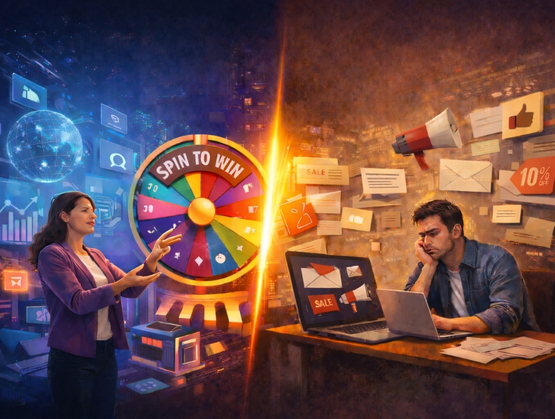
Static marketing isn’t dominant because it’s more engaging. It’s dominant because it fits neatly into how organisations already operate. When teams are under pressure to deliver quickly and predictably, they default to formats they understand and even if those formats are less effective.
Marketing Follows Organisational Comfort, Not Audience Behaviour
Here’s a harder truth the industry doesn’t always acknowledge. Marketing output often reflects internal comfort, not external behaviour.
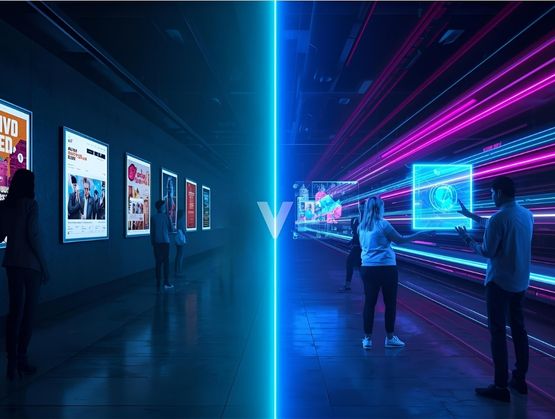
Audiences today are highly interactive everywhere else. They tap, swipe, play, respond, customise, and participate across apps, games, platforms, and social experiences. Interaction is no longer novel, it’s expected.
But many brand campaigns are still designed for a world where attention is given automatically, not earned through participation. The result is a growing disconnect between how people naturally behave and how brands continue to communicate.
Interactive Campaigns Are Still Treated as ‘Special Projects’
Another pattern emerges when reviewing industry commentary.
Articles from platforms such as Marketing Interactive and Campaign Asia often frame interactive and experiential campaigns as innovation pilots or flagship activations rather than everyday marketing tools. This reinforces the perception that interactive campaigns are complex, resource-heavy, and difficult to scale.
As long as interactivity is positioned as something exceptional, adoption will continue to lag behind intent.
The Cost of Staying Static Is Quiet but Significant
Static marketing doesn’t fail loudly. It fails quietly.
Audiences scroll past. Videos are skipped. Messages are seen but not felt. Metrics still exist, but meaning slowly erodes. Over time, this creates a bigger risk than trying something interactive.
In a landscape where attention is scarce and competition is constant, brands that don’t invite participation slowly disappear into the background.
What This Means for the Future of Marketing
Interactive campaigns aren’t a trend waiting to be validated. They’re a proven format waiting to become normal.
The shift from static to interactive won’t happen because brands suddenly “discover” engagement. It will happen when interactivity stops being treated as a risk, a novelty, or a special occasion — and starts being treated as a natural extension of modern communication.
When that mindset shift happens, the change won’t be slow. It will be obvious!
A Real Nation Perspective
So yes, surveys clearly show that brands want to use interactive campaigns. What’s holding the industry back isn’t belief. It’s execution!
At Real Nation, we believe interactive experiences shouldn’t be rare, risky, or reserved for special moments. They should be accessible and designed for how people actually engage today.
Real Nation is building qiksense.
qiksense is an AI-powered SaaS platform that helps brands and partners create interactive campaigns fast, with no code. Campaigns can be built via drag-and-drop or natural language, then launched quickly. qiksense provides clear campaign analytics like impressions, participation, and conversion rates that gives partners full visibility into performance and enables better, data-driven decisions.
If you’re exploring how interactive campaigns can move from concept to everyday execution and want to understand what’s possible for your brand with qiksense, get in touch with us. We’d love to have a conversation.